history.hero.established_date
History of Ephesus
The Definitive History of Ephesus
Birth of a Sacred City
From Anatolian Mother Goddess to Greek Metropolis
Long before marble streets and Roman theaters, the land of Ephesus was sacred. Archaeological evidence shows settlement dating back to the Bronze Age. The region was originally inhabited by Anatolian peoples who worshipped a powerful mother goddess a cult that would later evolve into the worship of Artemis, the city's most famous deity.
Around the 10th century BCE, Ionian Greeks colonized the area and established Ephesus as a major city-state. Thanks to its strategic location near the Aegean coast and fertile lands, the city quickly became a commercial powerhouse. It was both a port city and a spiritual center, drawing merchants, pilgrims, and rulers alike.
The construction of the Temple of Artemis elevated Ephesus to global fame. Known as one of the Seven Wonders of the Ancient World, the temple was not just a religious site but an economic engine. It functioned as a sanctuary, a treasury, and a political symbol. From this moment on, Ephesus was no longer just a city it was a legend.
10th c. BCE
Greek Colonization
1 of 7
Ancient Wonders
129 BCE
Became Roman Province
Roman Grandeur
Marble, Power, and Public Life
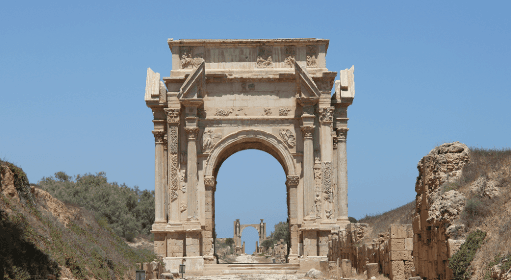
Ephesus reached its golden age under Roman rule. After becoming part of the Roman Republic in 129 BCE and later flourishing under the Empire, the city transformed into one of the most magnificent urban centers in the Mediterranean.
Urban Planning and Monumentality
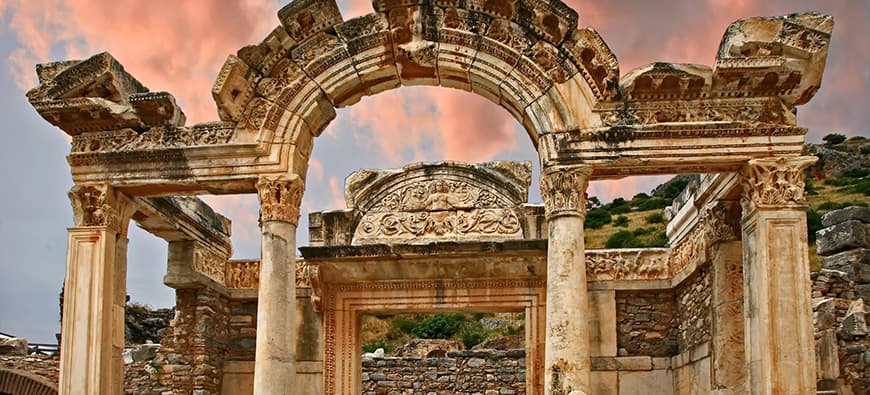
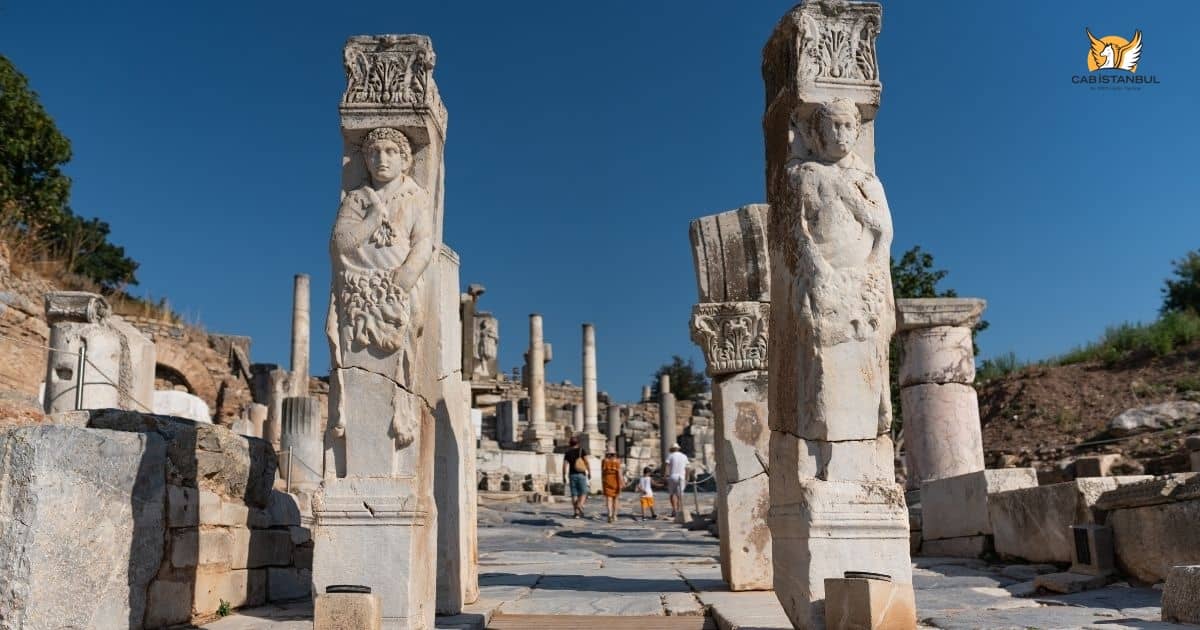
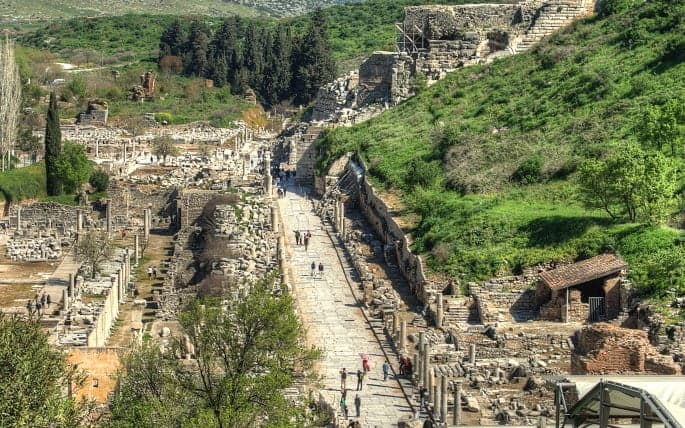
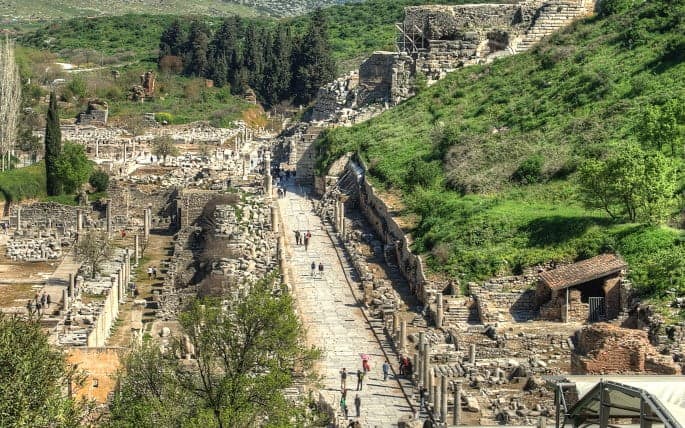
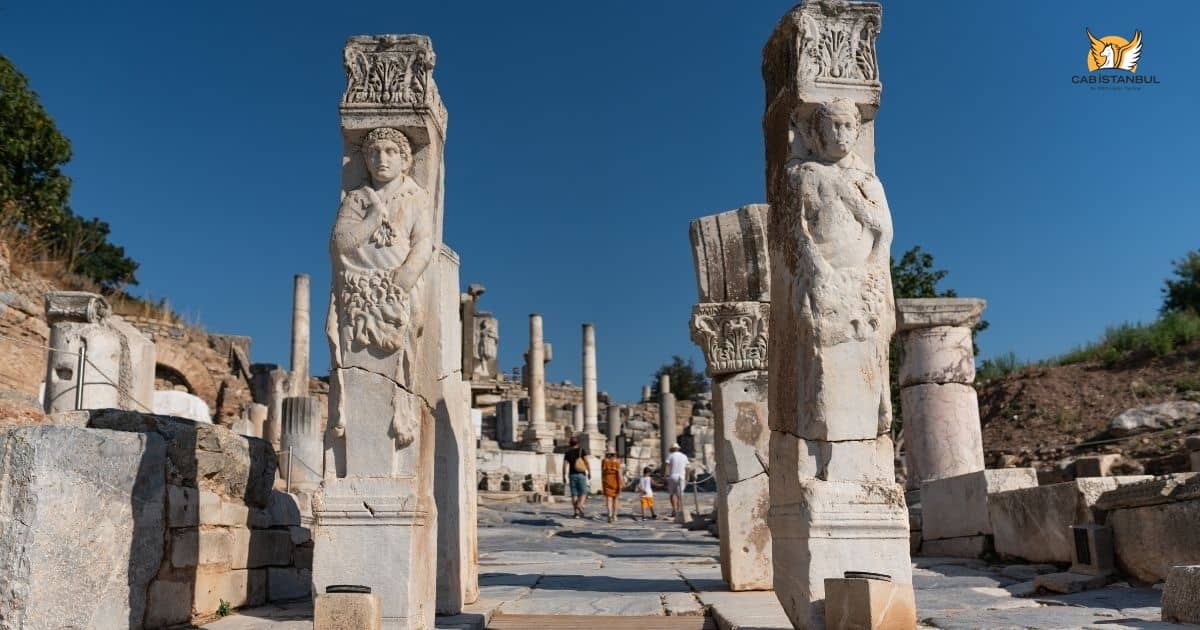
The city was carefully planned with colonnaded streets, aqueducts, baths, and monumental gateways. Roman engineering reshaped Ephesus into a display of imperial prestige. Marble paved the Curetes Street, linking the political and commercial heart of the city.
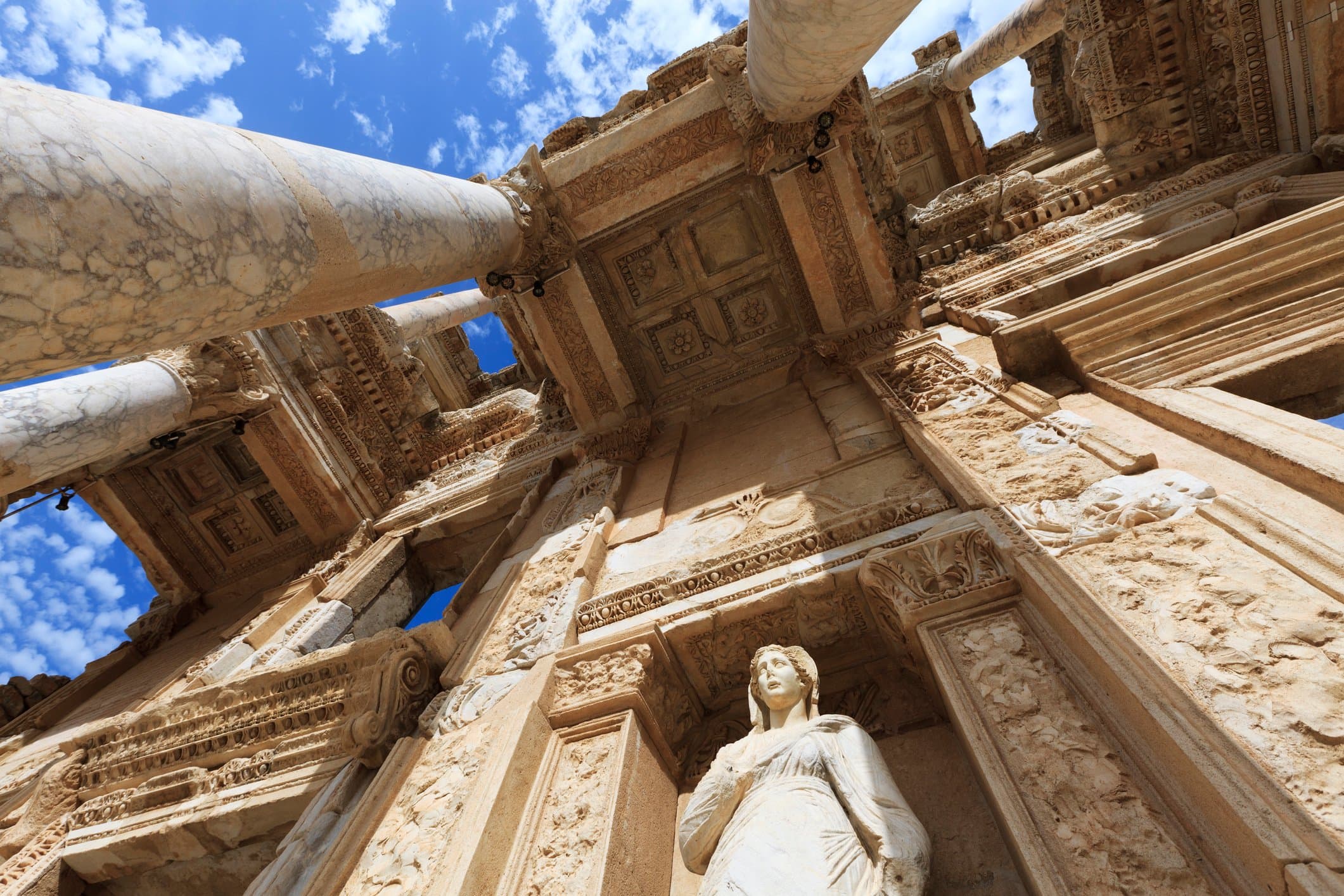
The Library of Celsus
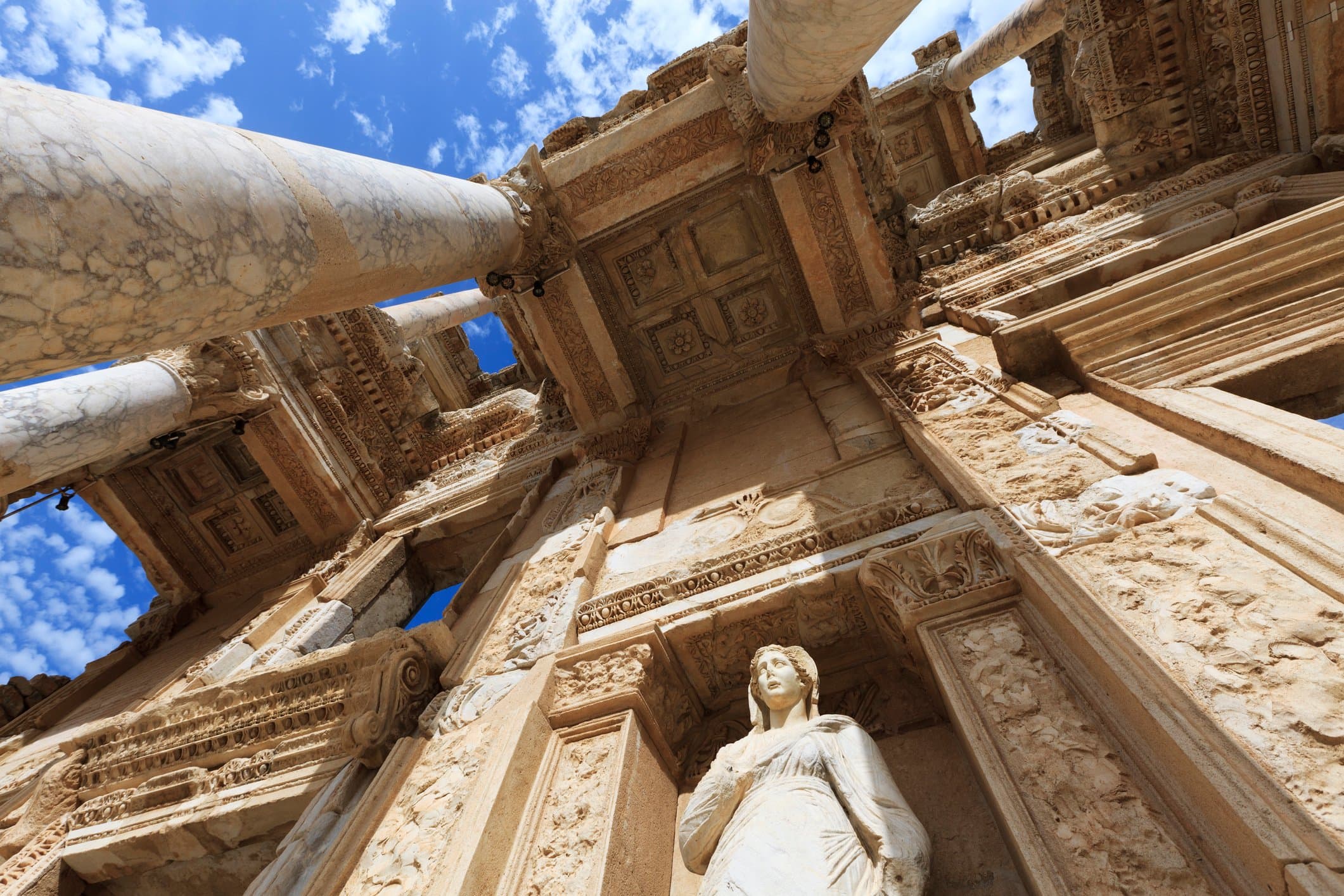
Perhaps the most iconic structure of Ephesus, the Library of Celsus was built in 117 CE as both a tomb and a library. Its grand façade, with Corinthian columns and statues symbolizing wisdom and knowledge, remains one of the most photographed ruins in the world.
"Ephesus was not merely a city of stone and marble; it was a living stage where religion, commerce, and empire converged."
The Great Theatre
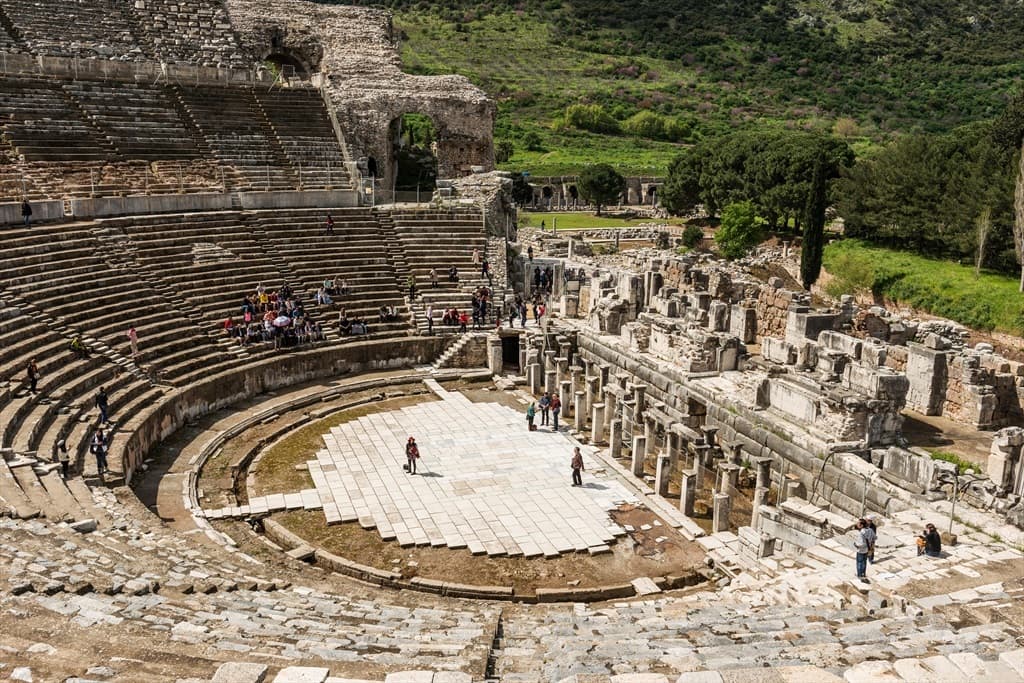
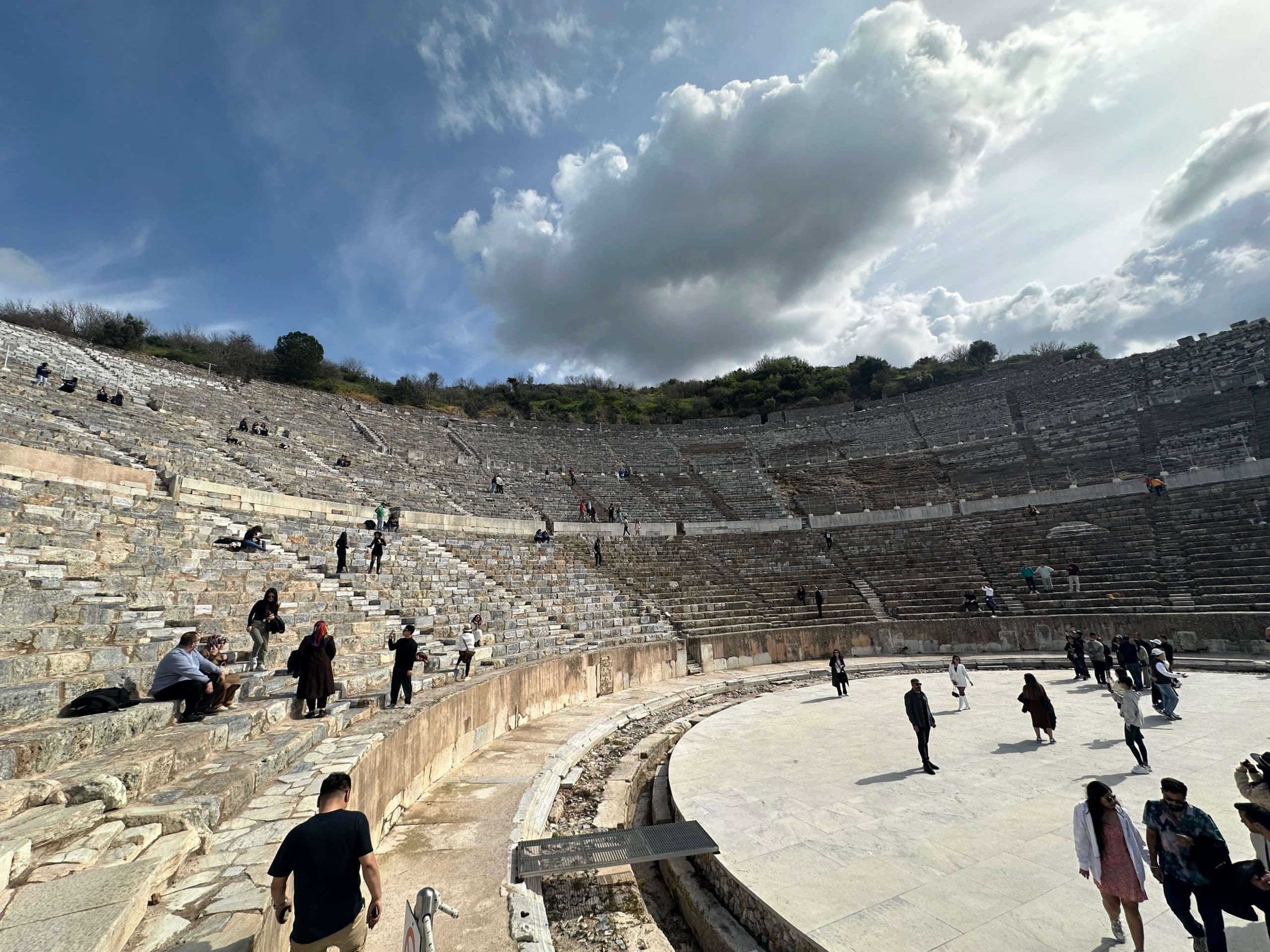
Carved into the slope of Mount Pion, the Great Theatre could host approximately 25,000 spectators. It was used for dramatic performances, political gatherings, and gladiatorial events. It also played a role in early Christian history, when the apostle Paul preached in the city.
The Temple of Artemis
Rebuilt multiple times, the Temple of Artemis stood as a masterpiece of classical architecture. Measuring over 100 meters in length and supported by 127 marble columns, it symbolized both divine protection and civic pride.
Terrace Houses
Located on the slopes opposite the Curetes Street, the Terrace Houses reveal the luxurious lifestyle of Ephesus’ elite. With intricate mosaics, frescoes, and private heating systems, they demonstrate the sophistication of urban Roman life.
Harbor and Landscape
Where Trade Met the Sea
Ancient Ephesus was once a thriving port city connected directly to the Aegean Sea. Its harbor made it one of the most important commercial hubs in the eastern Mediterranean, linking Asia Minor to Rome and beyond.
Over centuries, however, the Kaystros River deposited sediment into the harbor basin. Gradually, the sea receded, trade declined, and the city's lifeline disappeared. What was once a maritime gateway slowly turned into inland ruins.
The surrounding hills provided natural defense and scenic beauty. Sacred groves once surrounded the Temple of Artemis, blending religion with landscape. Today, the countryside of Selçuk preserves the quiet echoes of that once-bustling metropolis.
"history.gardens.quote"
Early Christianity
Ephesus holds a significant place in Christian history. The apostle Paul lived and preached here for several years, and the city later hosted the Council of Ephesus in 431 CE. According to tradition, the Virgin Mary spent her final years near Ephesus.
history.art_technology.artist_name
Infrastructure and Innovation
Roman aqueducts supplied water across the city, while advanced sewage systems ran beneath its streets. Public baths, fountains, and latrines reveal a society that prioritized civic engineering. Ephesus was not just beautiful — it was functional and modern for its time.
- history.art_technology.tech_list_1
- history.art_technology.tech_list_2
- history.art_technology.tech_list_3
Prosperity and Abandonment
The Silence After Glory
Daily Urban Life
Merchants, sailors, priests, and scholars filled the streets of Ephesus. Markets bustled near the Agora, and public debates echoed in the theater. The city was a melting pot of cultures — Greek, Roman, Anatolian, and later Christian.
Economic Shifts
As the harbor silted up, Ephesus gradually lost its commercial dominance. Earthquakes further damaged the city, and shifting trade routes weakened its strategic importance.
Byzantine Transformation
During the Byzantine era, Ephesus shrank and relocated closer to the hills. New fortifications were built, but the ancient marble city slowly fell into ruin.
Rediscovery
By the Middle Ages, Ephesus was largely abandoned. Rediscovered through archaeological excavations in the 19th century, it became one of the best-preserved classical cities in the world.
history.life_and_decline.end_date
A Timeless Legacy
From Ruins to World Heritage
Today, Ephesus stands as one of Turkey’s most important archaeological sites and a UNESCO World Heritage Site. It attracts millions of visitors who walk its marble streets each year.
Archaeological Exploration
Excavations began in the late 19th century and continue today. Austrian archaeologists played a key role in uncovering the Library of Celsus and the Terrace Houses. Restoration efforts aim to preserve the site for future generations.
history.republic.time_905
A Living Classroom
Ephesus serves as an open-air museum, offering scholars and visitors insight into urban life of the ancient Mediterranean world.
Global Significance
From pagan sanctuary to Christian center, from Roman metropolis to archaeological treasure, Ephesus embodies the layered history of Anatolia. Its ruins remind us that civilizations rise, transform, and leave stories carved in stone.
"history.republic.quote_ataturk"
history.republic.ataturk_name
Common Questions About Ephesus
Explore key facts about this ancient city.
Ephesus is famous for the Temple of Artemis, one of the Seven Wonders of the Ancient World, and for its exceptionally well-preserved Roman ruins such as the Library of Celsus and the Great Theatre.
Yes. Although founded by Greek colonists, Ephesus became a major Roman city and the capital of the province of Asia in 129 BCE.
The harbor gradually silted up due to sediment from the Kaystros River, leading to economic decline and the city's abandonment.
Yes. The apostle Paul preached here, and the city hosted the Council of Ephesus in 431 CE. It is also traditionally associated with the Virgin Mary.
Yes. Ephesus was inscribed as a UNESCO World Heritage Site in 2015.