Where are you coming from?
Popular Times
Plan your visit to avoid crowds
2 PM:Usually as busy as it gets
6 AM: 0%
6
7 AM: 0%
8 AM: 17%
9 AM: 37%
9
10 AM: 57%
11 AM: 69%
12 PM: 84%
12
1 PM: 92%
2 PM: 96%
3 PM: 89%
3
4 PM: 74%
5 PM: 46%
6 PM: 0%
6
7 PM: 0%
8 PM: 0%
9 PM: 0%
9
10 PM: 0%
11 PM: 0%
Know Before You Go
Important information for your visit
Ephesus is an outdoor archaeological site with uneven marble surfaces. Comfortable walking shoes are essential.
In summer months (June-September), temperatures can exceed 35°C (95°F). Bring a hat, sunglasses, and sunscreen.
The site has limited shade. A water bottle is recommended.
Photography is allowed throughout the site, but tripods require special permission.
Entrance tickets to the Terrace Houses are separate but highly recommended.
The site is partially wheelchair accessible, though some areas have steps.
Restrooms are available at the entrance and exit of the site.
Most tours last 2-3 hours depending on your pace and interest.
How to Get There
The easiest ways to reach Ephesus Ancient City from popular locations
Explore Ephesus Ancient City
Discover the magnificence of the Ephesus sections
What Visitors Ask Us
Everything you need to know before your visit
The total duration of the Ephesus tour typically ranges between 4 and 6 hours, depending on whether you choose a private or small group option and which sites are included in your itinerary. A standard program covering Ephesus Ancient City, the House of the Virgin Mary, the Temple of Artemis, and a local lunch usually fits comfortably within this timeframe. Private tours offer more flexibility, allowing you to adjust the pace and time spent at each location, while small group tours follow a structured but well-balanced schedule. For cruise passengers, the timing is carefully aligned with ship arrival and departure hours.
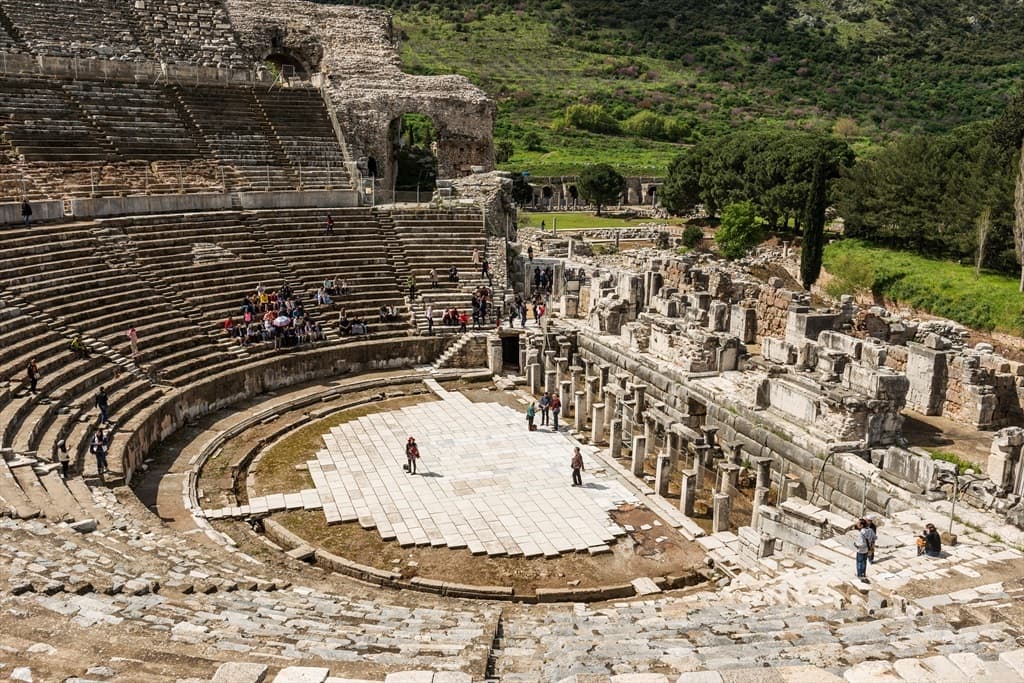
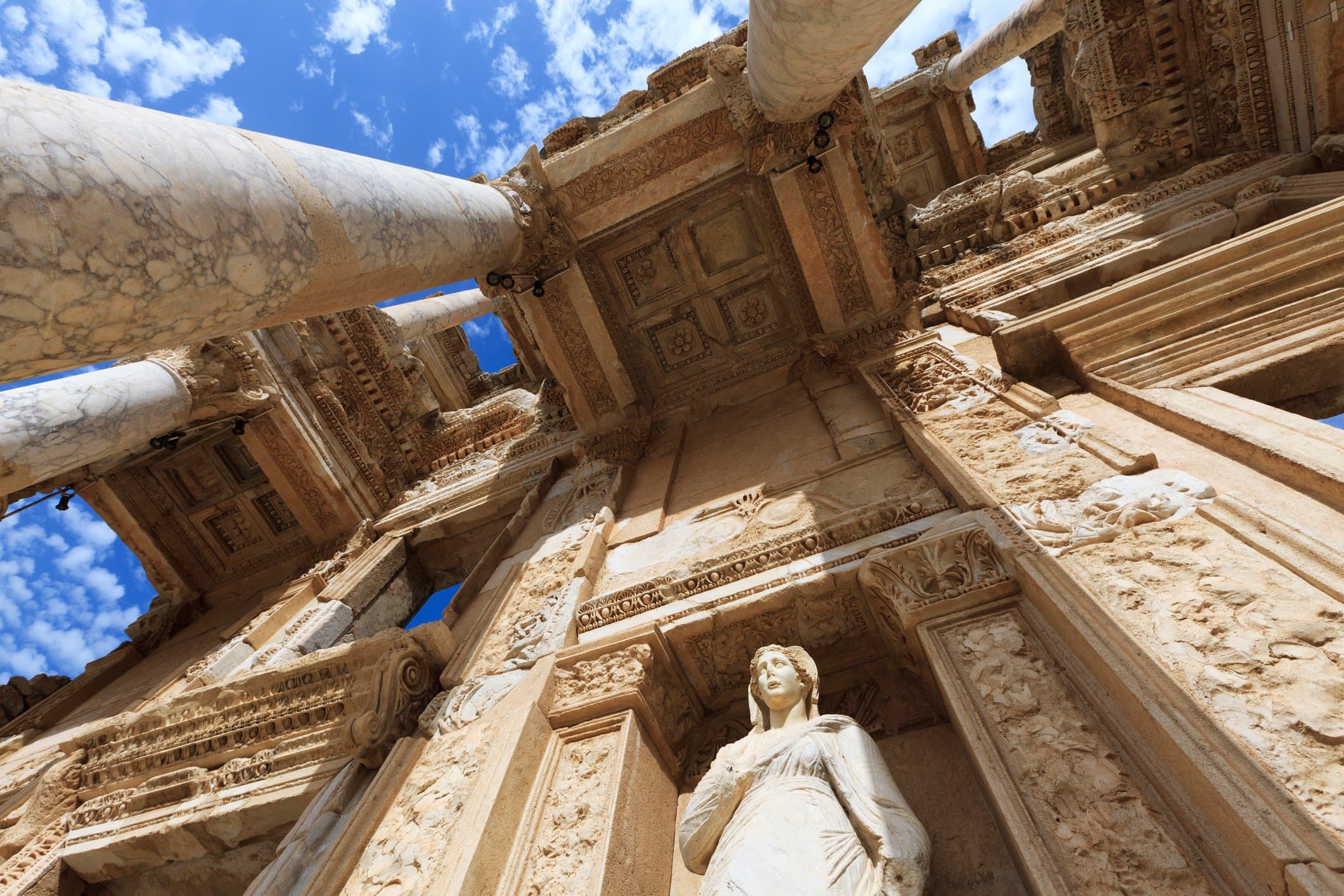
Yes, Ephesus involves a moderate amount of walking, as it is a large open-air archaeological site with marble streets and uneven ancient pathways. Visitors typically walk through the main historical highlights, including the Celsus Library, the Great Theatre, and the Curetes Street, which requires steady walking on slightly inclined surfaces. The pace is manageable and includes short pauses for explanations and photos, but comfortable walking shoes are strongly recommended. Private tours allow for more flexibility in pacing, while small group tours maintain a consistent but reasonable tempo suitable for most visitors in average physical condition.
Ephesus is partially accessible but not fully wheelchair-friendly due to its ancient layout. The site features original marble roads, slopes, and uneven stone surfaces that can make navigation challenging for standard wheelchairs. However, certain sections near the upper entrance and main viewing areas can be accessed with assistance. Visitors with limited mobility may prefer a private tour, as this allows more control over pacing and route selection. If accessibility support is required, it is advisable to inform us in advance so we can plan the visit in the most comfortable and practical way possible.
We recommend wearing comfortable walking shoes with good grip, as the marble streets of Ephesus can be smooth and occasionally slippery. Light, breathable clothing is ideal during warmer months, as the site is largely open and exposed to the sun. A hat, sunglasses, and sunscreen are strongly recommended in spring and summer. In cooler seasons, layering is advisable since mornings can be mild and afternoons warmer. There is no strict dress code for visiting Ephesus itself, but modest clothing may be appreciated when visiting the House of the Virgin Mary, as it is considered a religious site.
Yes, the tour is generally suitable for elderly guests who are comfortable walking moderate distances at a steady pace. While there is some walking involved, the visit includes regular stops where the guide provides explanations and allows time to rest. For elderly visitors who prefer a slower pace or additional flexibility, a private tour is often the most comfortable option. This allows the itinerary and walking rhythm to be adapted according to personal comfort levels while still covering the essential highlights of the region.
Yes, many of our tour options include a traditional local lunch as part of the program. The meal is typically served at a carefully selected local restaurant and offers a variety of regional dishes in a comfortable setting. Both private and small group tours may include lunch depending on the selected package, and this is clearly specified during booking. If you have dietary restrictions or special preferences, it is recommended to inform us in advance so appropriate arrangements can be made.